
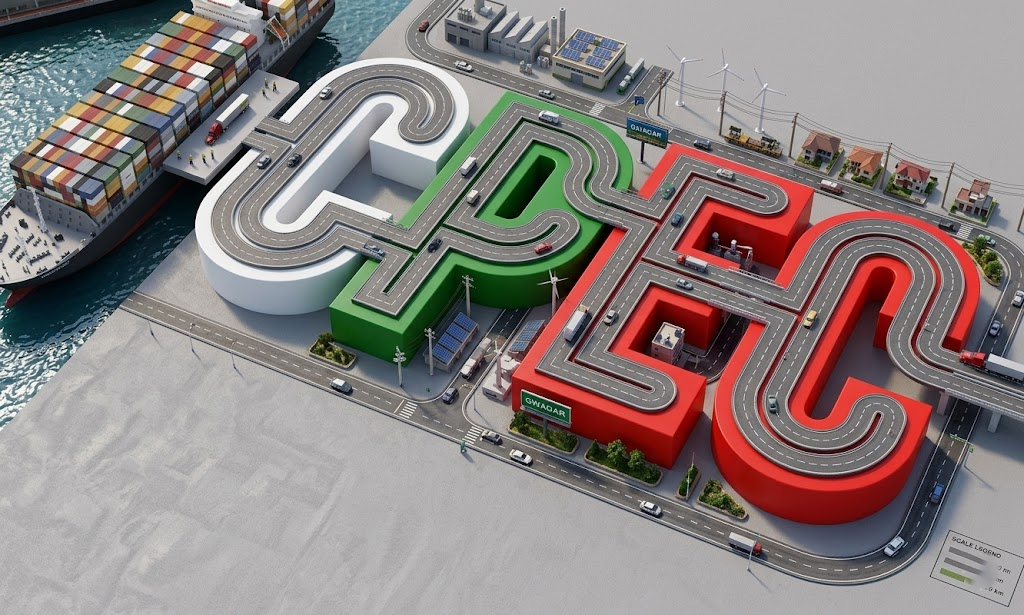
Pakistan’s economic partnership with China continues to remain one of the country’s most significant strategic and financial relationships, but experts believe the next phase of the China-Pakistan Economic Corridor (CPEC) will ultimately be judged by its ability to deliver real industrial growth rather than infrastructure alone.
China remains Pakistan’s largest trading partner and a major source of investment, financing support and economic cooperation. Recent high-level engagements and investment forums have also reflected continued Chinese interest in expanding industrial and commercial activity in Pakistan.
At the same time, China’s broader global investment strategy is evolving from large-scale infrastructure projects toward industrial relocation, technology integration and diversified supply chains, creating new opportunities for Pakistan under CPEC Phase II.
However, analysts say Pakistan’s main challenge is no longer attracting international interest, but converting those opportunities into sustainable economic and industrial outcomes.
The first phase of CPEC focused heavily on infrastructure development, including energy projects, highways and transport networks aimed at addressing long-standing bottlenecks in the economy. These projects improved connectivity and energy availability, laying the groundwork for future industrial expansion.
CPEC Phase II is now shifting attention toward Special Economic Zones (SEZs), export-oriented industries, industrial clusters, agricultural modernisation and integration into regional supply chains. The broader objective is to transform Pakistan from a transit route into a production-based economy.
Despite these ambitions, progress in the industrial phase has remained slower than expected.
Special Economic Zones have emerged as a central pillar of the strategy, with more than three dozen zones approved across the country, including several priority projects developed under bilateral cooperation with China. These zones are intended to attract investment, increase exports and generate industrial activity.
However, many of the planned SEZs have yet to achieve meaningful operational progress despite years of policy focus and institutional support.
Recent reforms aimed at speeding up land allocation, improving administrative coordination and reducing investment hurdles reflect renewed efforts to revive momentum. Still, experts argue that the core issue lies not in policy announcements, but in implementation challenges.
While tax incentives, subsidised land and regulatory concessions may attract initial investor interest, long-term industrial investment depends on broader structural factors including policy consistency, reliable regulations, contract enforcement, logistics efficiency and financial stability.
Analysts warn that without these conditions, SEZs risk becoming largely real estate-driven projects instead of functioning industrial ecosystems capable of supporting long-term economic growth.
Institutional fragmentation is also being viewed as a major obstacle. Multiple agencies and overlapping authorities involved in industrial development have created coordination challenges and uncertainty for investors.
Experts believe the issue is not the lack of institutions, but the absence of integrated and streamlined governance structures capable of delivering efficient implementation.
China’s role in Pakistan’s economy continues to be viewed as strategically important, particularly through financing support, infrastructure investment and economic cooperation. However, economists stress that external partnerships alone cannot replace domestic competitiveness.
According to analysts, the success of CPEC Phase II will depend on Pakistan’s ability to build strong local supply chains, improve export competitiveness, ensure reliable energy systems and maintain stable regulatory frameworks.
Without these elements, large-scale infrastructure connectivity may not translate into sustainable industrial transformation.
Pakistan’s broader economic challenge is increasingly being linked to limited domestic absorption capacity. While the country has managed to attract foreign engagement and investment interest, converting those opportunities into long-term industrial growth has remained difficult.
Experts argue that Special Economic Zones must become integrated parts of the national production system rather than isolated investment projects. Stronger links with domestic industries and supply chains are considered essential for creating durable economic impact.
Economic observers believe CPEC Phase II now represents more than just another development initiative. It is increasingly being viewed as a critical test of Pakistan’s ability to move beyond infrastructure construction toward export-driven industrial competitiveness and sustainable economic growth.
The next phase of CPEC, analysts say, will ultimately be measured not by the number of roads or corridors built, but by whether those connections can generate productive industry, higher exports and long-term economic transformation.