
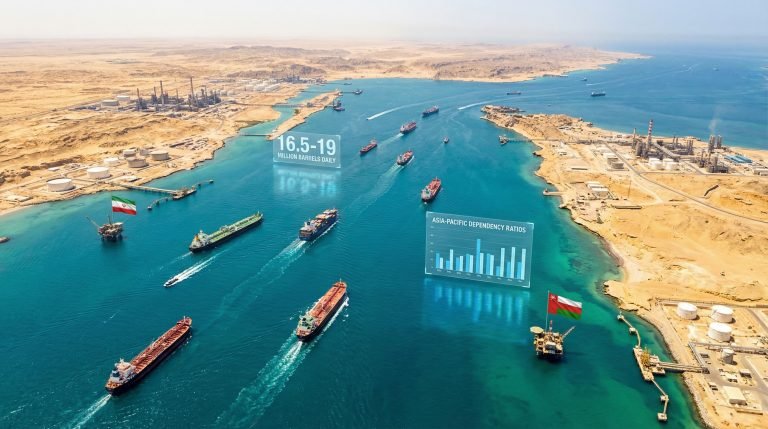
Iran has introduced a new system to regulate the movement of ships in the Strait of Hormuz amid ongoing regional tensions. According to Iran’s state broadcaster, the new mechanism aims to enhance control over maritime traffic and ensure that vessel movements are managed more effectively in light of growing security concerns. Officials say the move comes at a time when tensions with the United States persist and uncertainty in the region is increasing.
Under this system, all commercial and other vessels wishing to pass through the Strait of Hormuz will be required to follow a predefined procedure. Ships will receive a message via an email address linked to the Persian Gulf Strait Authority, providing them with detailed rules and regulations regarding transit. Compliance with these instructions has been made mandatory, and only those vessels that fully adhere to the prescribed guidelines will be allowed to pass.
Iranian authorities state that the system is designed not only to ensure maritime security but also to prevent any potential clashes or unforeseen incidents. The Strait of Hormuz is a critically important global trade route, through which a significant portion of the world’s oil and other essential goods is transported. Any disruption in this passage could have serious implications for the global economy.
It is worth noting that Iran had imposed strict restrictions on shipping in the Strait of Hormuz on February 28 following the outbreak of conflict involving the United States and Israel. These measures have not only heightened tensions but have also raised global concerns regarding the availability and security of key maritime routes. Various countries and international organizations are closely monitoring the situation.
According to analysts, Iran’s new system is part of a broader effort to strengthen its control over maritime operations and maintain a strategic balance of power in the region. At the same time, it is being viewed as a new challenge for global trade. Diplomatic efforts are ongoing to reduce tensions and ensure the safety of vital shipping lanes.