
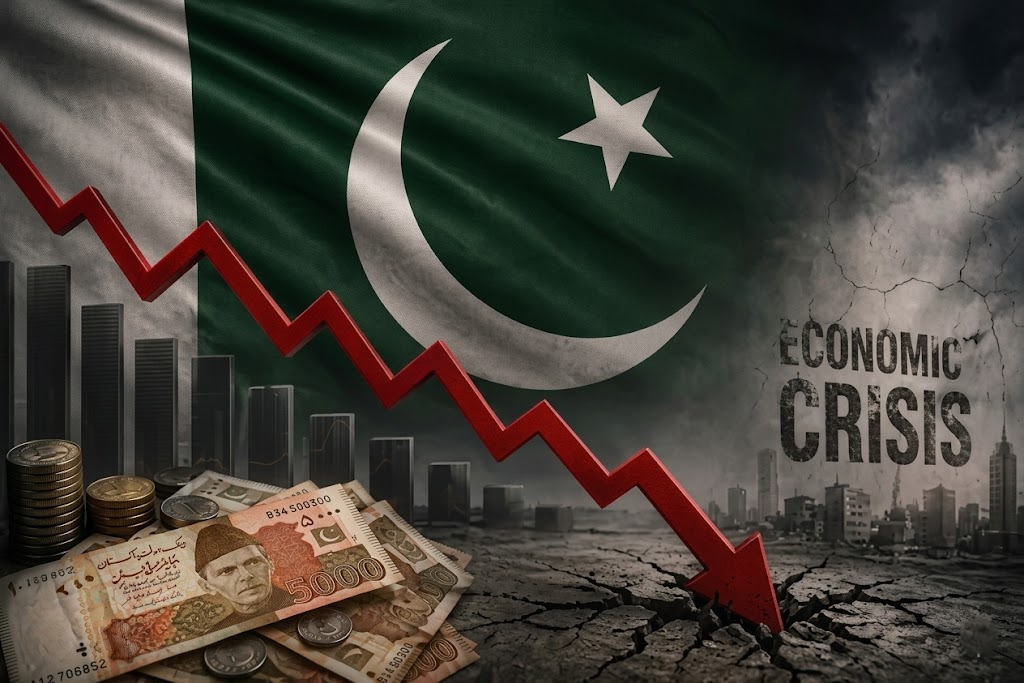
Pakistan’s hopes for stable economic recovery and stronger growth momentum have come under renewed pressure as the ongoing conflict between the United States and Iran continues to disrupt global energy markets and increase uncertainty for import-dependent economies.
The country had been moving toward a relatively stable economic path, with growth expectations reaching around 4% this year and projections of 5% in the coming fiscal cycle. Policymakers were also aiming to complete the ongoing IMF programme, improve foreign exchange reserves and support consumer-driven growth through relief measures in upcoming budgets.
However, the prolonged conflict in the Middle East has significantly altered those expectations.
What was initially viewed as a short-term confrontation has evolved into a wider regional crisis, with rising military activity and fears of a prolonged blockade in the Strait of Hormuz driving global oil and LNG prices sharply higher. The situation is placing additional strain on low-income and energy-importing countries such as Pakistan.
Economic analysts warn that an extended disruption in Gulf shipping routes could severely impact Pakistan’s economy by triggering higher inflation, increasing interest rates and weakening growth prospects. Concerns are also growing over possible currency depreciation as import costs continue to rise.
The country’s export competitiveness is already facing pressure from elevated energy prices, while rising production costs are discouraging industrial expansion and increasing unemployment risks. Investors are increasingly shifting capital toward safer banking instruments instead of long-term industrial investment.
In response to the worsening outlook, experts believe the government may need to intensify austerity measures to reduce fuel consumption and control the growing import bill. Greater focus is also being placed on accelerating electric public transport systems, particularly electric buses, as a way to reduce dependence on imported fuel while providing affordable transportation to the public.
Tax reforms are also being viewed as essential for economic stability. Authorities are under pressure to widen the tax base and improve revenue collection to meet long-term fiscal targets. Economists argue that relying on limited petroleum levies and missing tax collection goals could weaken efforts to raise the country’s tax-to-GDP ratio.
At the same time, calls are growing for greater relief for the formal sector, including lower taxes for salaried individuals, restoration of tax credits and gradual reductions in additional corporate taxes for compliant businesses.
Analysts also recommend encouraging small and medium enterprises to enter formal markets through long-term tax incentives linked to stock exchange listings.
The real estate sector is another area where policy adjustments are being proposed. Higher taxes on speculative plot trading and incentives for home ownership could help redirect investment toward productive economic activity. Expanding housing finance schemes is also being discussed as a way to support industries such as cement, steel and glass.
The sharp rise in energy costs has further intensified external account concerns. During the peak of the crisis, Pakistan’s weekly energy import bill reportedly surged dramatically, increasing pressure on foreign exchange reserves. Combined with slowing remittance inflows, this could widen the current account deficit significantly in the coming months.
The State Bank of Pakistan has already responded by tightening monetary policy to contain inflation and stabilise the currency, aiming to avoid broader financial instability.
However, economists believe monetary tightening alone will not be enough. They stress the need for a coordinated national economic strategy focused on export-led growth, foreign investment and long-term structural reforms.
Attention is also shifting toward reducing reliance on external financial support by boosting exports and attracting sustainable foreign direct investment. Pakistan is expected to face major repayment obligations to key international partners in the coming years, increasing the urgency for stronger economic fundamentals.
Experts argue that integrating the informal economy into the documented sector will be critical for long-term growth. Sectors including textiles, information technology, mining and pharmaceuticals are being highlighted as areas with untapped potential that could help expand exports and industrial capacity.
There are also calls to better utilise overseas Pakistani investment through initiatives linked to infrastructure development, technology and refinery upgrades.
Economic observers believe Pakistan possesses significant untapped potential, but achieving sustainable long-term growth will require consistent policy direction, institutional reforms and a national focus on economic expansion beyond short-term political cycles.
The ongoing Middle East conflict is increasingly being seen as a reminder of the country’s structural economic vulnerabilities and the urgent need for reforms aimed at achieving greater financial and strategic independence.